Retinol is a vitamin A derivative widely used in dermatology and skincare. It is one of the most extensively researched active ingredients for reducing the appearance of wrinkles, restoring skin structure, and accelerating skin cell renewal, earning its reputation as the “Gold Standard” in anti-aging cosmetic ingredients.
| Common Name | Retinol |
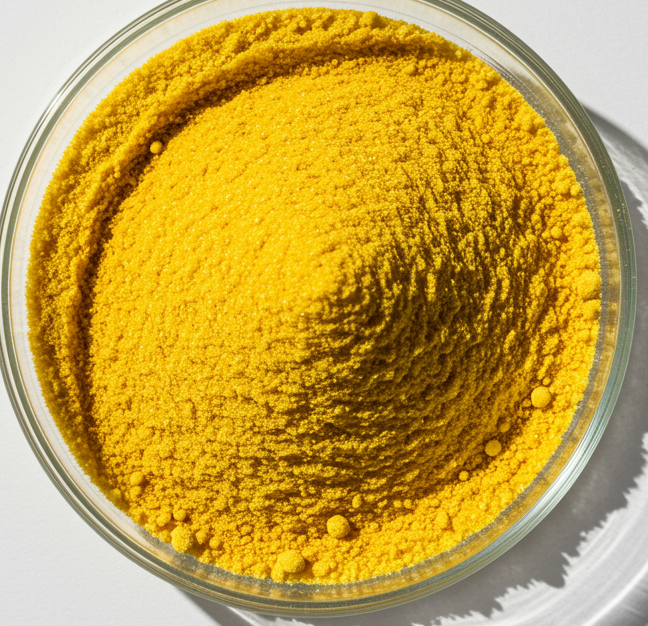
| Appearance | Typically a pale yellowish-white liquid |
| Source | Chemically synthesized |
| Benefits | Helps reduce wrinkles, promote cell proliferation, and stimulate collagen production |
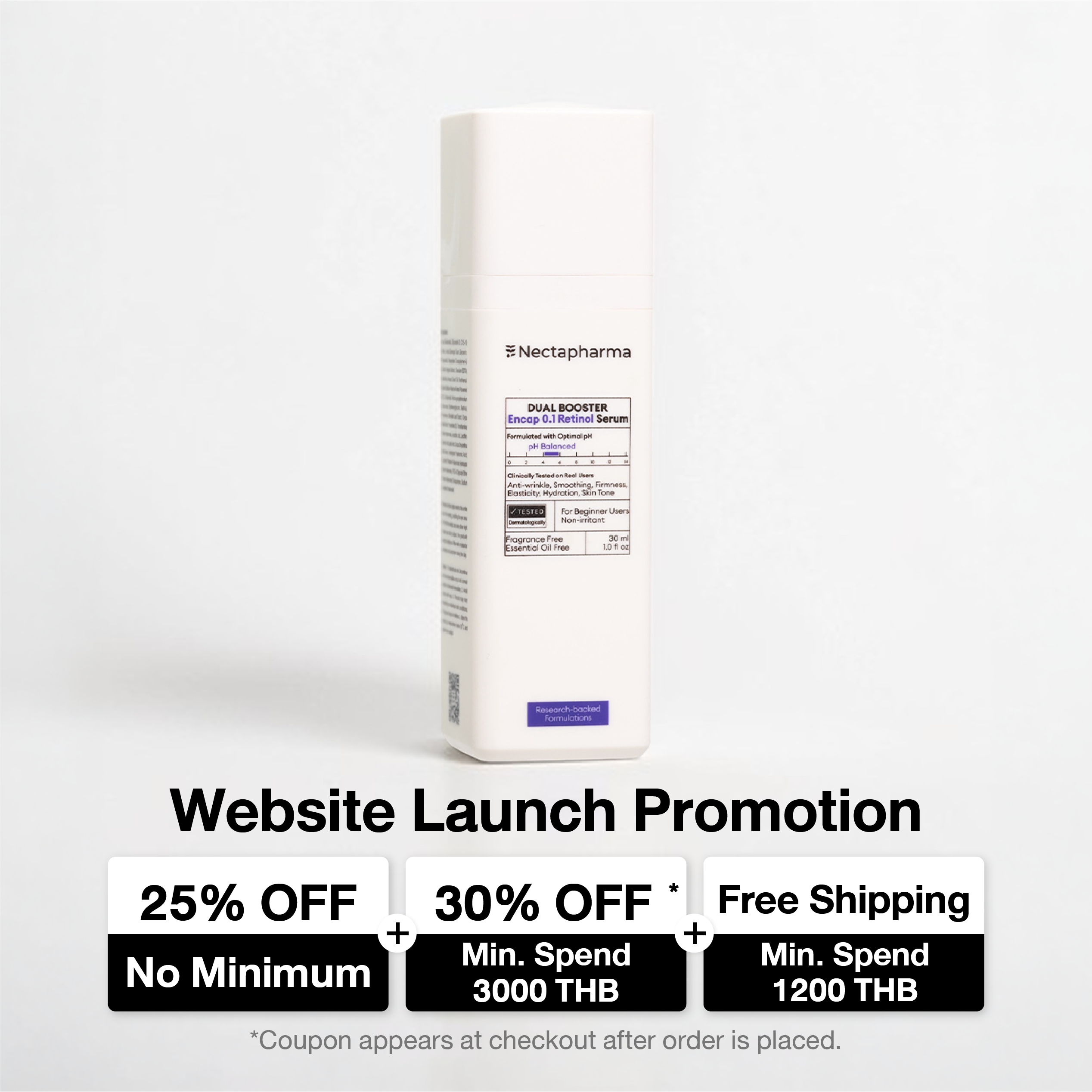
| Recommended Product | Nectapharma Dual Booster Encap 0.1 Retinol Serum |
TLDR
Retinol is a vitamin A derivative with extensive research supporting its use in skincare. It helps reduce the appearance of wrinkles, stimulate collagen production, promote skin cell proliferation, and accelerate skin renewal for smoother, more youthful-looking skin.
Retinol may cause irritation, especially when used together with high-strength acids such as AHA, BHA, or Vitamin C in the form of Ascorbic Acid, or when used soon after laser treatments. Those with sensitive skin should start with a 0.1% concentration and use it 2–3 times per week before gradually increasing the frequency.
Retinol is suitable for those beginning to notice wrinkles, dullness, uneven skin tone, or enlarged pores, as well as those looking for long-term skin maintenance.
How Does Retinol Work on the Skin? Does It Cause Irritation?
Although Retinol is one of the most popular and widely accepted skincare ingredients, it does not become active immediately after being applied to the skin. It must first undergo a series of conversion steps within the skin.
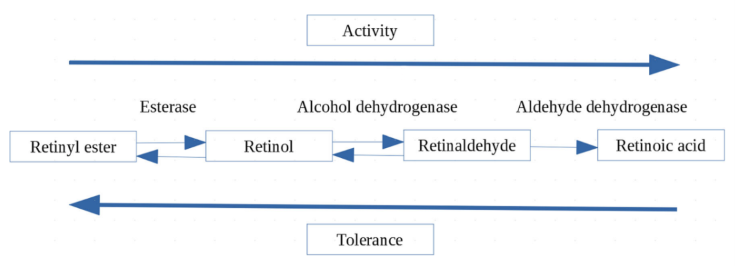
This process is known as the Retinoid Metabolic Pathway, in which Retinoid precursors are converted into Retinoic Acid, the biologically active form that directly acts on skin cells. The closer a Retinoid is to Retinoic Acid in this pathway, the faster and stronger its activity tends to be. However, it may also have a higher potential to cause skin irritation.
Retinol, on the other hand, requires two conversion steps before becoming Retinoic Acid. This allows it to work more gradually while still providing effective results, with a lower tendency to cause stinging, redness, or peeling. It is therefore suitable for those who are new to Retinoids or have sensitive skin. [1]
What Does Retinol Do? Why Is It Considered the Gold Standard in Skincare?
Retinol is one of the most extensively researched active ingredients, with substantial evidence supporting its effectiveness in reducing wrinkles, stimulating collagen production, and restoring skin structure at the cellular level. This is why Retinol has long been used in both anti-aging and skin rejuvenation products.
Retinol works by accelerating skin cell turnover and stimulating fibroblast activity in the dermis, helping promote the production of new collagen to replace age-related structural deterioration. As a result, the skin can appear smoother, firmer, and more youthful. What does Retinol help with? Studies have shown the following benefits:
1. Retinol Helps Reduce the Appearance of Wrinkles with Continuous Use
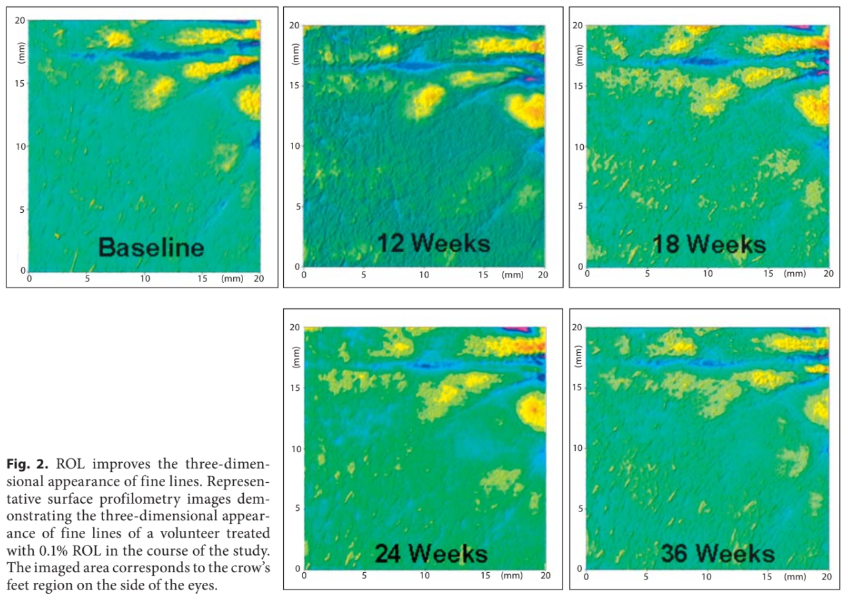
Even at a low concentration of 0.1%, Retinol can help reduce the appearance of wrinkles and improve age-related skin changes. Research has shown that Retinol can stimulate the expression of important genes and promote the formation of new skin cells, resulting in a measurable increase in epidermal thickness.
In a nine-month clinical study, 0.1% Retinol was shown to reduce the appearance of wrinkles around the eyes and improve uneven skin tone without causing the same degree of irritation associated with higher concentrations of Retinol. [2]
2. Retinol Helps Stimulate Collagen Production
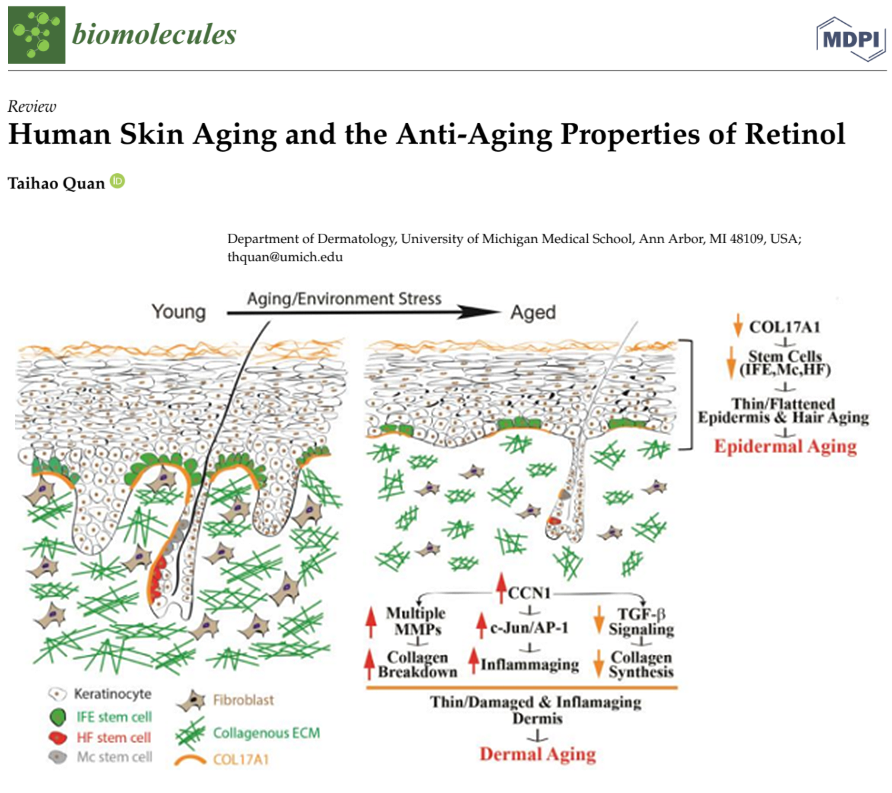
Retinol stimulates fibroblasts to increase the production of Type I Collagen, one of the primary structural proteins responsible for maintaining skin strength.
At the same time, it helps reduce the activity of Matrix Metalloproteinases (MMPs), enzymes involved in collagen breakdown, and decreases CCN1, a protein associated with impaired collagen production in aging skin. Together, these mechanisms help support more effective collagen synthesis and preservation. [3]
3. Retinol Promotes Cell Proliferation and Increases Epidermal Thickness
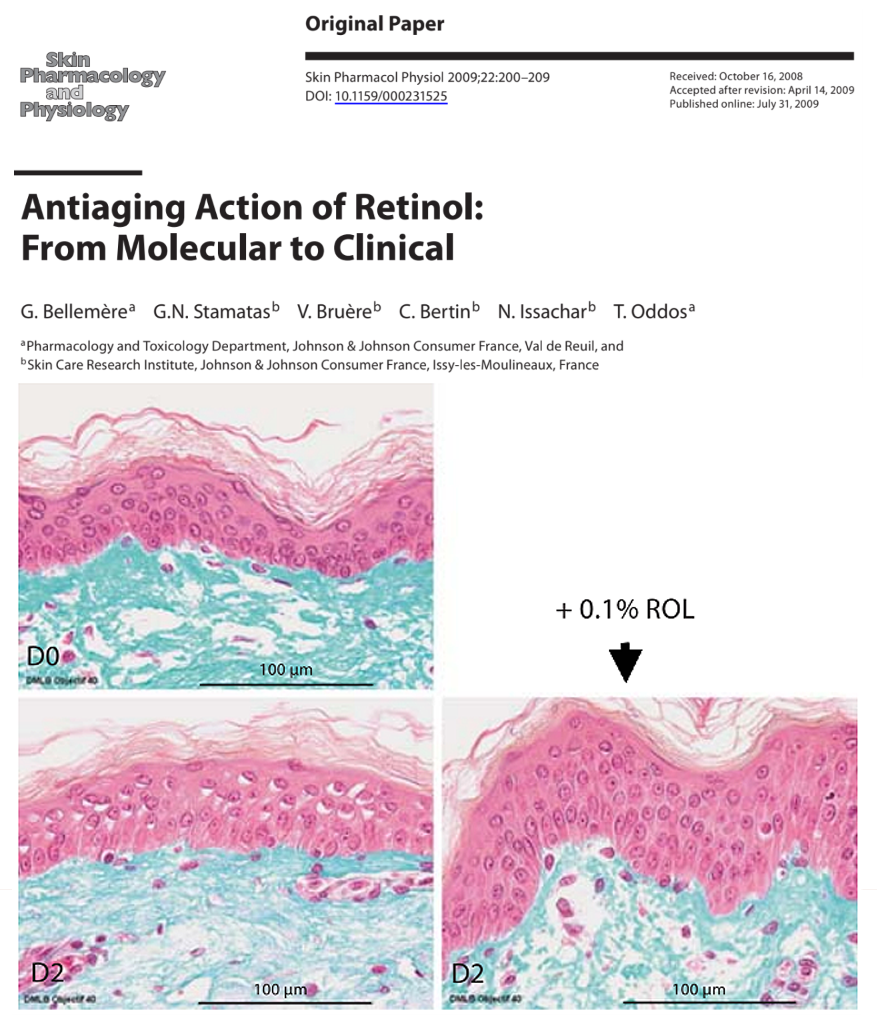
Regular use of 0.1% Retinol can stimulate keratinocyte proliferation, promoting the formation of new cells within the epidermis.
This increased cellular activity can contribute to a thicker and more resilient epidermal layer while supporting overall skin barrier function. [2], [3]
How to Use Retinol Effectively: When Should You Apply It and What Should You Avoid?
Although Retinol is highly effective, improper use may increase the risk of irritation. To use Retinol effectively and safely, beginners should start with an appropriate concentration, such as 0.1%, allowing the skin time to adapt before gradually increasing the frequency or concentration.
In general, beginners can start by applying Retinol 2–3 times per week and gradually increase to nightly use once the skin has become accustomed to it.
When should Retinol be applied? Retinol is generally recommended for nighttime use because it is sensitive to UV light, which can reduce its stability and effectiveness. Sunscreen should therefore be applied every morning, while moisturizer should be used regularly alongside Retinol to help support the skin barrier.
What Should Not Be Used Together with Retinol?
- Avoid using Retinol at the same time as highly acidic ingredients such as AHA, BHA, or Vitamin C in the form of Ascorbic Acid, as this combination may increase the risk of irritation.
- Avoid using Retinol immediately after laser treatments or procedures that temporarily compromise or thin the skin barrier.
Who Is Retinol Suitable For? Which Skin Types May Benefit and Who Should Be Cautious?
Retinol is a versatile skincare ingredient that can address several skin concerns, particularly wrinkles and dullness. It is especially suitable for those looking for long-term and more intensive skin care, including:
- Those beginning to notice wrinkles: Retinol helps promote skin cell proliferation, stimulate collagen production, and reduce the appearance of wrinkles.
- Those with dull or uneven skin tone: Retinol helps accelerate skin cell turnover, revealing newer skin cells and promoting a brighter, more even-looking complexion.