Vitamin D is commonly available in two main forms: Ergocalciferol (Vitamin D2) and Cholecalciferol (Vitamin D3), which differ in their chemical structures. However, neither form is biologically active immediately after entering the body. Both must first undergo metabolic conversion to their active form, known as Calcitriol, before they can exert their physiological effects.
Although both are forms of vitamin D, a meta-analysis has demonstrated that Vitamin D3 is significantly more effective than Vitamin D2 at increasing and maintaining blood vitamin D levels. As a result, Vitamin D3 has become the preferred form and is widely used in both medical treatments and dietary supplements. This is because Vitamin D3 plays an important role in supporting multiple aspects of overall health, including bone and muscle health, immune function, brain function, and cardiovascular health. [1], [2], [3]
| Common Name | Vitamin D3 (Cholecalciferol) |
| Appearance | White powder |
| Source | Eggs, fish, and cod liver oil |
| Key Benefits | Supports bone and muscle health, immune function, brain function, and cardiovascular health |
| Recommended Products | Nectapharma Imuvatec, Nectapharma Pearletane, and Nectapharma Revitafol |
TLDR
Vitamin D3 (Cholecalciferol) is a form of vitamin D that can be naturally synthesized by the body when the skin is exposed to UVB radiation from sunlight.
Vitamin D deficiency is becoming increasingly common. Statistics show that 31% of the Thai population is deficient in vitamin D, which may increase the risk of osteoporosis, impaired immune function, and various chronic diseases.
Vitamin D3 supplementation supports multiple aspects of health, including bone and muscle health, immune function, brain function, and cardiovascular health.
Where Does Vitamin D3 (Cholecalciferol) Come From?
Naturally, the human body can synthesize Vitamin D3 when the skin is exposed to UVB radiation from sunlight. However, the prevalence of vitamin D deficiency continues to increase worldwide. One of the main reasons is the modern lifestyle, where people spend most of their time indoors and have limited exposure to sunlight. Therefore, consuming foods rich in Vitamin D3, such as eggs, fish, and cod liver oil, is important. However, the amount of Vitamin D3 obtained from food alone may not be sufficient to meet the body's daily requirements. As a result, Vitamin D3 supplements have been developed as a convenient and effective option to help individuals achieve adequate vitamin D intake. [4], [5]
What Does Vitamin D3 Do?
Vitamin D deficiency remains a common health concern. Statistics indicate that approximately 31% of the Thai population is deficient in vitamin D, and the prevalence continues to increase each year. Long-term vitamin D deficiency may contribute to various health issues, including osteoporosis, muscle weakness, impaired immune function, and an increased risk of chronic diseases. Therefore, preventing vitamin D deficiency through Vitamin D3 (Cholecalciferol) supplementation may help reduce these risks while supporting the proper function of multiple systems throughout the body. [3], [6], [7]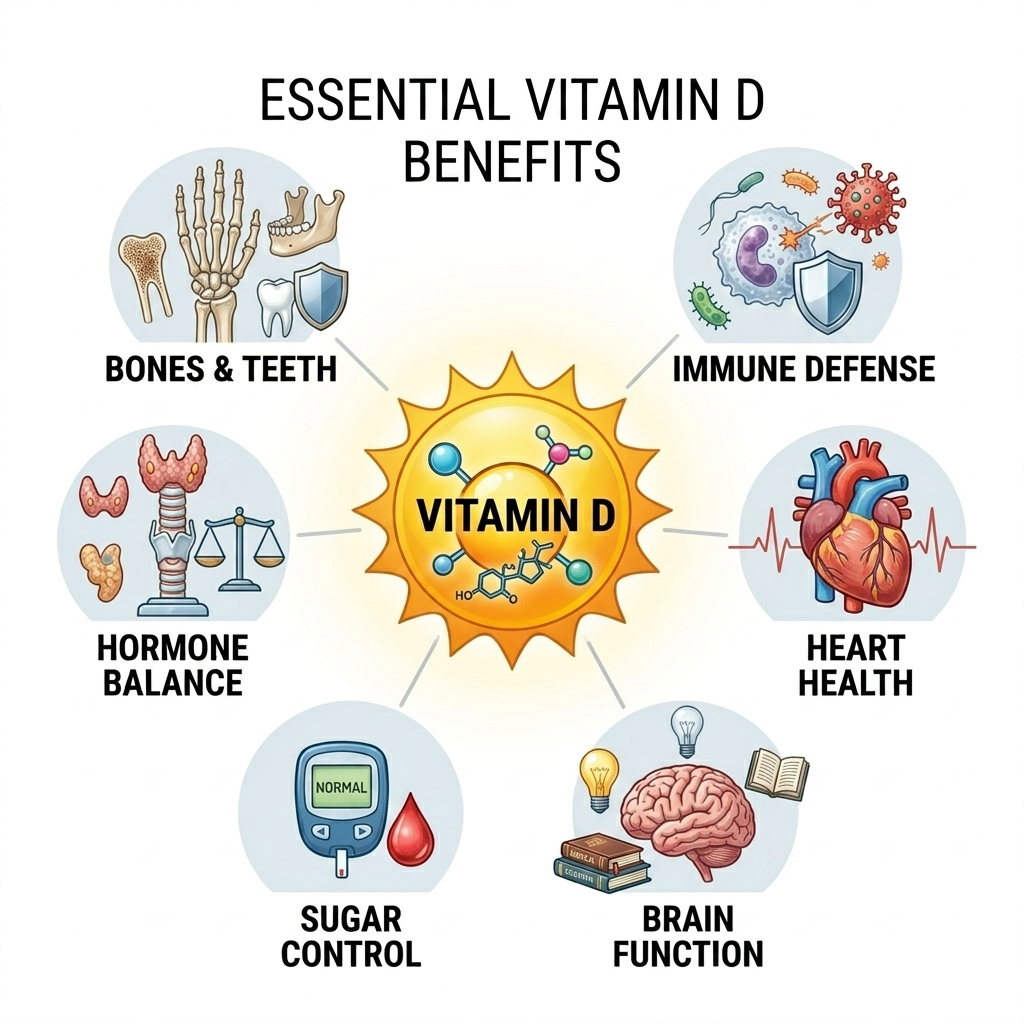
Vitamin D3: Multifaceted Health Benefits
Vitamin D3 and Bone Health
One of the most well-recognized benefits of Vitamin D3 is its role in maintaining healthy bones and teeth. Vitamin D3 helps increase the absorption of calcium and phosphorus, regulates blood calcium levels, and plays a crucial role in bone formation. A meta-analysis of seven studies found that supplementation with 800 IU of Vitamin D3 and 1,000 mg of calcium daily significantly reduced the risk of hip fractures.
Vitamin D3 and Immune Function
Vitamin D3 plays an important role in supporting the immune system by enhancing the activity of white blood cells, improving the body's ability to eliminate pathogens and foreign substances. It also helps regulate inflammatory responses. A meta-analysis found that Vitamin D3 supplementation reduced the risk of upper respiratory tract infections by up to 70%, particularly among individuals with vitamin D deficiency. In addition, research suggests that individuals with adequate vitamin D levels may experience reduced disease severity and lower mortality rates associated with COVID-19 infection. [3], [9]
Vitamin D3 and Chronic Disease Prevention
Another important role of Vitamin D3 is its potential contribution to reducing the risk of chronic diseases. Vitamin D3 helps regulate hormonal balance, which influences the function of various organs throughout the body. Research-supported benefits include the following: [3]
-
Cardiovascular Health
Maintaining adequate vitamin D levels through Vitamin D3 supplementation may help lower blood pressure in individuals with hypertension and may reduce the risk of ischemic heart disease and stroke.
-
Diabetes
Studies suggest that individuals with blood vitamin D levels of 40–50 ng/mL may have up to a 52% lower risk of developing diabetes, particularly those with prediabetes. Vitamin D3 may support pancreatic function and help improve blood glucose regulation.
-
Brain Health
Epidemiological studies have shown that low blood vitamin D levels are associated with an increased risk of cognitive decline and Alzheimer’s disease. Therefore, maintaining adequate vitamin D status through Vitamin D3 supplementation may help support long-term brain health and slow age-related cognitive decline.
Are There Any Precautions When Taking Vitamin D3 (Cholecalciferol)?
The body naturally produces Vitamin D3 and also obtains small amounts through food, which are generally safe. However, individuals taking Vitamin D3 supplements should pay attention to dosage. The recommended upper intake level is 4,000 IU (100 µg) per day, as excessive intake may lead to abnormally high blood calcium levels, which can be harmful to health.
To ensure safety and maximize benefits, adults should consume approximately 600 IU (15 µg) of Vitamin D per day. Individuals should consult a physician or pharmacist before taking Vitamin D3 supplements, especially those with underlying medical conditions, those taking medications regularly, pregnant women, or breastfeeding mothers, to ensure safe and appropriate use. [6]