Alpha-Mangostin is one of the major xanthones, a group of naturally occurring bioactive compounds found in mangosteen (Garcinia mangostana Linn.). It is most abundant in the mangosteen pericarp (peel), although it can also be found in the fruit, leaves, and bark. Xanthones belong to the broader family of polyphenols, which are widely distributed in plants. Scientific studies have demonstrated that Alpha-Mangostin possesses a wide range of biological activities. [1], [2]
Mangosteen peel has been used in traditional medicine for decades to treat various conditions, including skin infections, wound healing, diarrhea, and dysentery. Owing to its long history of traditional use, Alpha-Mangostin extracted from mangosteen peel has become the focus of increasing scientific research, aiming to better understand its mechanisms of action and diverse biological properties. [3], [4]
| Common Name | Alpha-Mangostin |
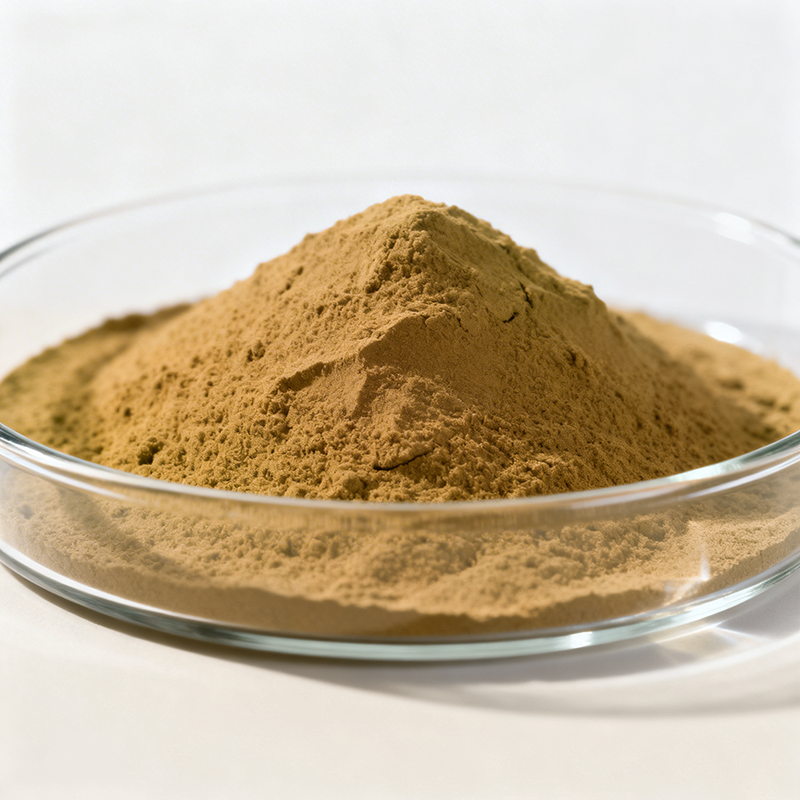
| Appearance | Brown powder |
| Source | Mangosteen peel (Garcinia mangostana Linn.) |
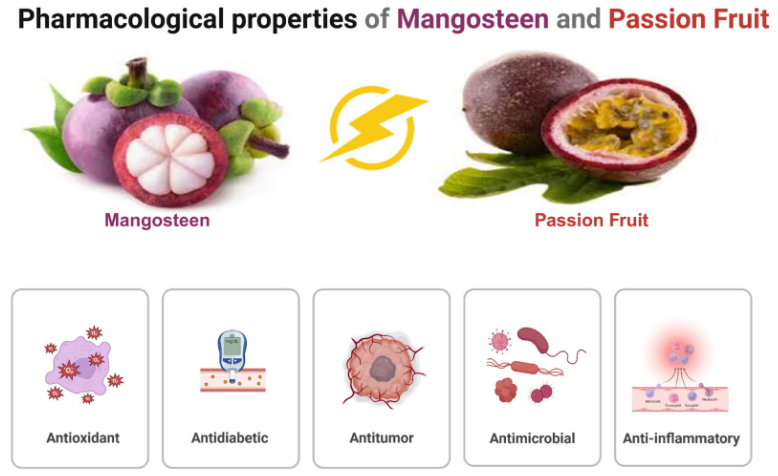
| Benefits | Antioxidant, anti-inflammatory, antibacterial, and anticancer properties |
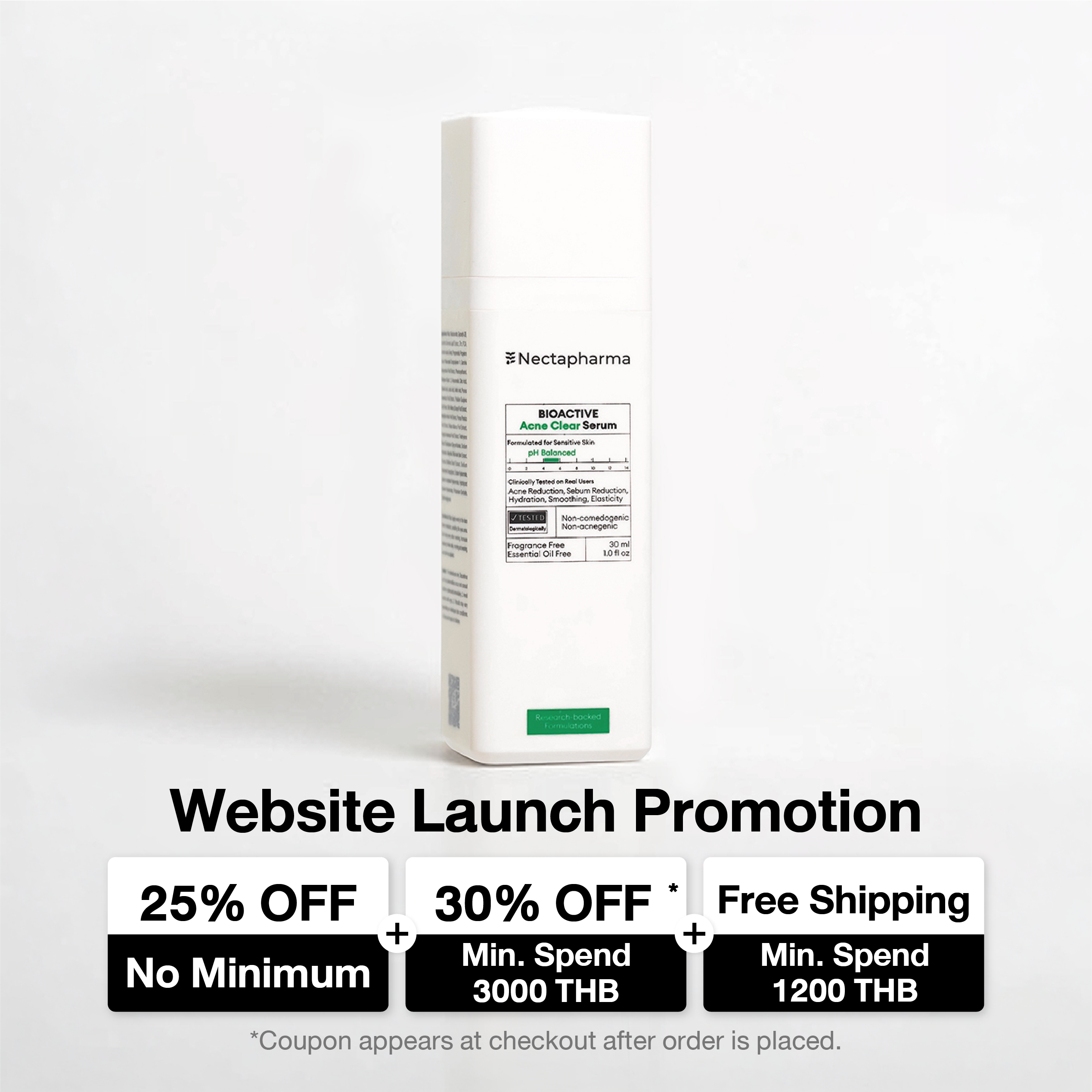
| Recommended Product | Nectapharma Bioactive Acne Clear Serum |
TLDR
Alpha-Mangostin is the major xanthone found in mangosteen peel, where it is present in the highest concentration.
Mangosteen peel extract, with Alpha-Mangostin as its principal bioactive compound, has become increasingly popular in cosmetic formulations, particularly for acne-prone skin. This is due to its potent antioxidant, anti-inflammatory, and antibacterial properties.
One of the key reasons Alpha-Mangostin is widely used in acne skincare is its ability to inhibit acne-associated bacteria, including Cutibacterium acnes (C. acnes) and Staphylococcus epidermidis (S. epidermidis).
Benefits of Mangosteen Peel Extract
Across Asia, mangosteen peel extract, with Alpha-Mangostin as its primary bioactive compound, is widely used in cosmetic products, particularly those formulated for acne-prone skin. This remains one of its most popular applications because research has shown that mangosteen peel extract exhibits multiple biological activities that target key mechanisms involved in acne development.
Beyond cosmeceutical applications, Alpha-Mangostin has also attracted interest in pharmaceutical research. Studies suggest that it may help support gastrointestinal health, cardiovascular health, and possesses potential anticancer properties, making it a promising compound for a wide range of health applications. [1], [5]
Mangosteen Peel Extract for Acne
Alpha-Mangostin, the principal bioactive compound in mangosteen peel extract, targets several key mechanisms involved in acne development. It exhibits anti-inflammatory, antioxidant, and antibacterial properties, particularly its ability to inhibit Cutibacterium acnes (C. acnes) and Staphylococcus epidermidis (S. epidermidis), two bacteria that play important roles in triggering skin inflammation. As a result, Alpha-Mangostin has become a widely used ingredient in skincare products formulated for acne-prone skin. [4]
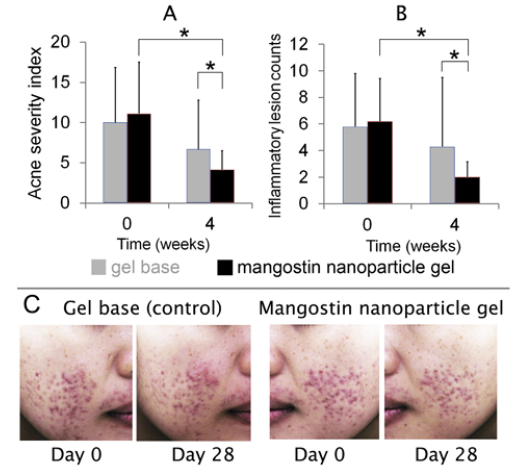
In one clinical study, researchers developed a nano-gel formulation containing Alpha-Mangostin for acne treatment. After 28 days of application, participants showed a significant reduction in both inflammatory lesions and acne severity in the treated areas compared with untreated areas. [6]
Alpha-Mangostin and Cancer Research
Among the many biological activities of mangosteen peel extract, one of the most extensively studied is its potential anticancer activity. Research has shown that Alpha-Mangostin, the major bioactive compound in mangosteen peel extract, exhibits anti-proliferative effects by inhibiting cancer cell growth and can also induce apoptosis (programmed cell death) in cancer cells. [5]
Laboratory studies have demonstrated that Alpha-Mangostin shows activity against several types of cancer cells, including liver cancer and cervical cancer cells. However, most of the current evidence comes from in vitro studies, and further clinical research is needed to confirm its efficacy and safety in humans. [7], [8]
Alpha-Mangostin for Inflammation
Mangosteen peel has long been used in traditional medicine for wound care and inflammatory conditions. Modern research supports this traditional use, attributing its benefits largely to the anti-inflammatory and antibacterial properties of Alpha-Mangostin.
In one clinical study, participants who consumed Alpha-Mangostin together with propolis for 8 weeks experienced a greater reduction in gingival inflammation compared with those who did not receive the supplement, suggesting that Alpha-Mangostin may help support the body's inflammatory response. [9]